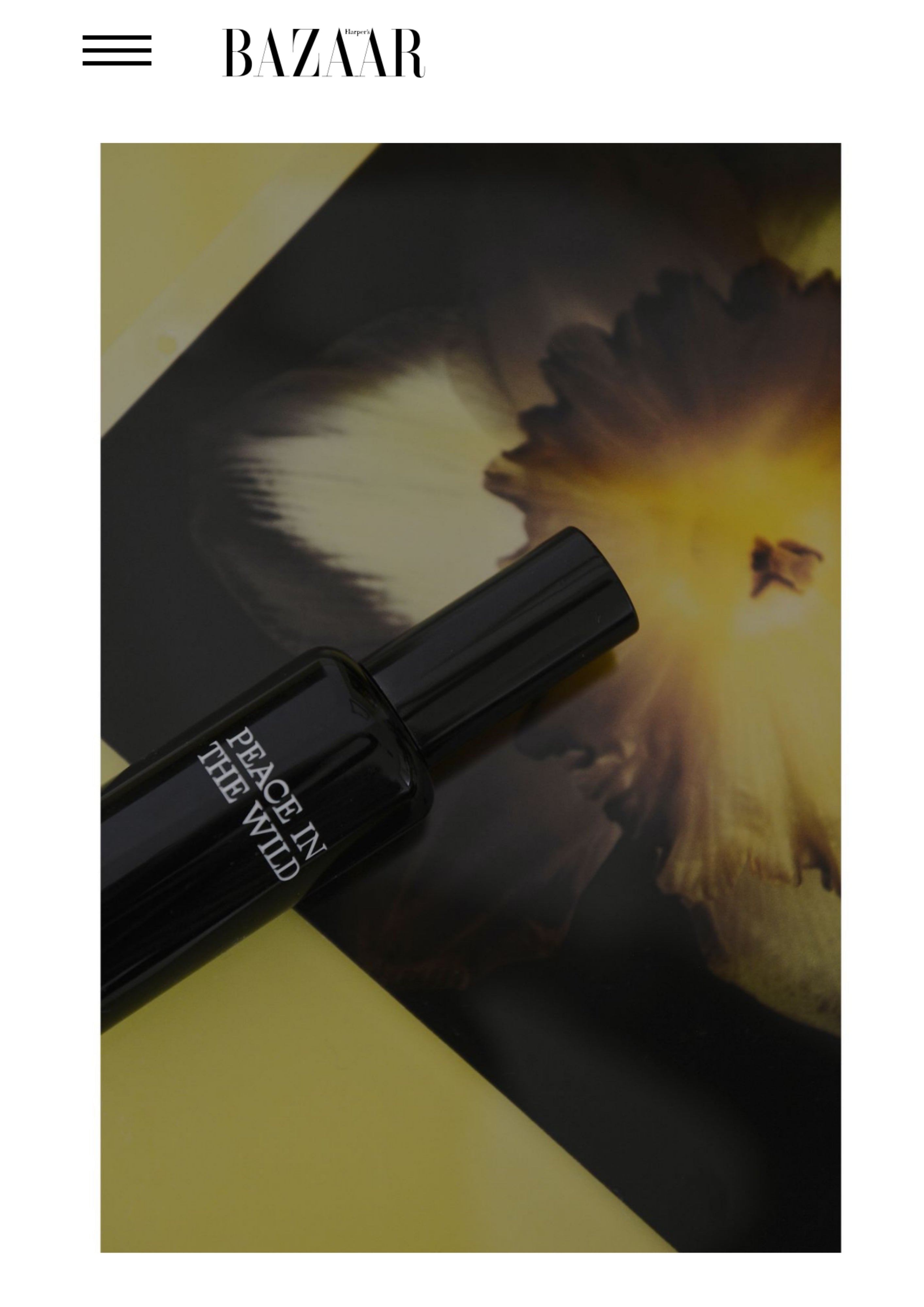
How Scents Influence Mood
In a recent interview with Harper’s Bazaar, PEACE IN THE WILD founder Kathrin Heller shared insights into how fragrances can influence, support and regulate our mood. While we often think of scent as something purely aesthetic, its connection to our emotions runs far deeper.
Why Scent Has Such a Powerful Effect on Our Emotions
Among all our senses, smell has a uniquely direct pathway to the brain. The olfactory system is closely connected to the limbic system — the area responsible for emotions, memories and emotional processing. This is why a single scent can instantly transport us back to a specific moment, place or feeling.
The smell of sunscreen may evoke memories of childhood summers. The scent of pine needles can bring us back to a walk through the forest. Fragrance often reaches us before conscious thought, influencing how we feel in subtle yet profound ways. Research suggests that scent can affect mood, stress perception, relaxation and even cognitive performance.
The Connection Between Fragrance and Mood
According to Kathrin Heller, scent should not be viewed solely as a decorative element in a space.
"Fragrances work on a level that often exists before language and conscious thought. A particular scent can instantly calm us, evoke memories or trigger emotions. This is why I see fragrance not only as something aesthetic, but as a sensory companion for emotional wellbeing."
Different aromatic profiles can support different emotional states:
Citrus Notes for Energy and Positivity
Fresh citrus oils such as lemon, bergamot or sweet orange are often associated with optimism, clarity and vitality. Their bright character can help create a lighter atmosphere and support concentration and focus.
Lavender for Calm and Relaxation
Lavender has long been valued in aromatherapy for its calming qualities. Its soft floral aroma is commonly used to support relaxation, ease tension and create a sense of emotional balance.
Forest and Woody Notes for Grounding
Pine, cedarwood, cypress and other woody notes often evoke a feeling of connection to nature. They can create an atmosphere of stability, spaciousness and inner calm, particularly in moments of stress or overstimulation.
Creating Positive Scent Associations
One of the most fascinating aspects of fragrance is our ability to create new emotional associations.
As Kathrin Heller explained in Harper’s Bazaar, wearing a new fragrance during a holiday, a meaningful journey or a special life moment can create a lasting sensory memory. Long after the experience has ended, the scent can bring back the emotions connected to that time.
This principle can also be used intentionally in everyday life:
- A fresh scent while working to support focus
- A calming scent during evening rituals to encourage relaxation
- An uplifting fragrance during movement or meditation
- A signature scent that transforms a room into a place of wellbeing
Over time, these rituals can strengthen the emotional connection between a fragrance and a desired state of mind.
Fragrance as a Daily Wellbeing Ritual
While fragrance is not a substitute for medical treatment or therapy, it can become a meaningful part of daily self-care. A carefully chosen scent has the ability to shift the atmosphere of a space, support emotional wellbeing and create moments of pause within a busy day.
At PEACE IN THE WILD, every fragrance is developed according to the principles of aromatherapy and crafted from pure essential oils. Rather than creating scent for scent’s sake, each composition is designed around a specific intention — whether to inspire focus, encourage deep rest, support clarity or elevate mood.
Because sometimes the smallest sensory ritual can create the greatest shift.



Von Kathrin Heller